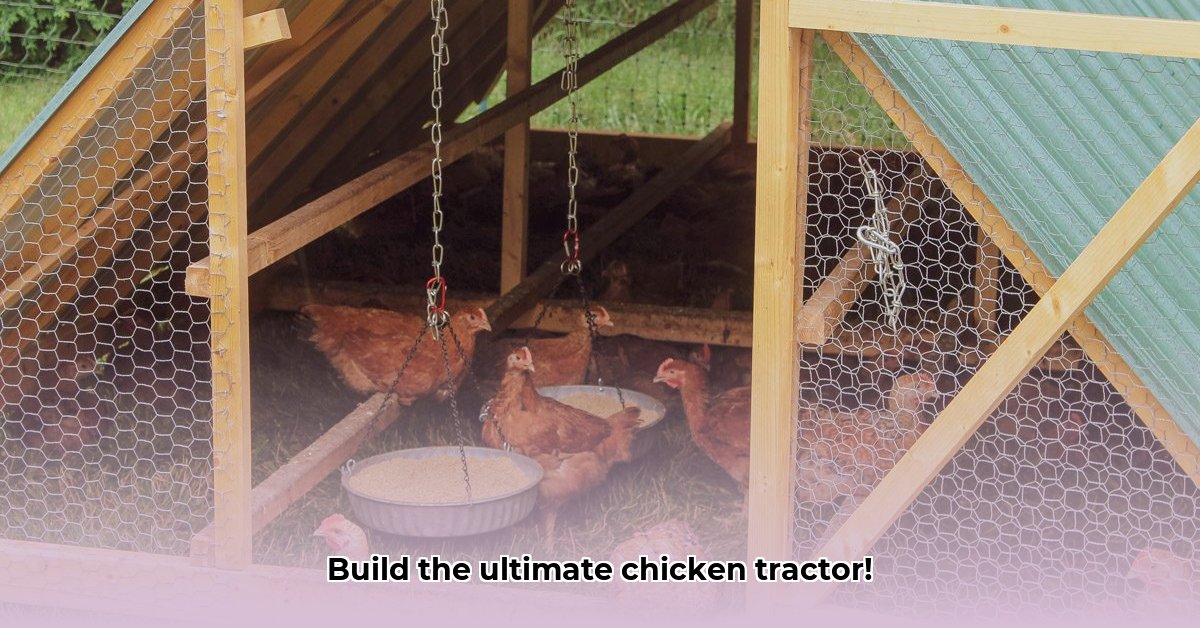
Building a chook tractor (mobile chicken coop) is a rewarding way to raise chickens sustainably, benefiting both your birds and your garden. This guide provides a step-by-step approach, allowing you to customize your design based on your budget, flock size, and available resources. For visual inspiration, check out these chicken tractor plans.
Planning Your Mobile Chicken Coop
Before you begin, careful planning is essential. First, determine your flock size. A general guideline is 4 square feet of interior coop space per hen, plus an additional 8 square feet per hen in the attached run. This ensures comfortable living conditions and minimizes stress. However, this can vary based on breed and climate; larger breeds might need more space.
Next, consider your yard and the coop's mobility. Will it be moved daily or weekly? This impacts design, with daily moves favoring a lighter, more easily maneuverable structure. Your budget will also influence material choices. Recycled materials can significantly reduce costs, but ensure they are sturdy and suitable for poultry housing.
Finally, consider your local climate. Adequate ventilation is crucial in summer to prevent heat stress. In colder climates, insulation may be necessary to provide warmth and protection. A well-designed chook tractor adapts to the various conditions it will experience. Do you have uneven terrain, which would impact wheel choice? These are all crucial elements to consider during the planning phase.
Essential Components of Your Chouk Tractor
Every successful chook tractor incorporates several key elements:
Sturdy Frame: The foundation is a robust frame, ideally using pressure-treated lumber (ensure it's poultry-safe). A rectangular shape is easiest to build and move.
Protective Walls: Solid walls protect your chickens from weather and predators. The lower portion should be a sturdy wire mesh (e.g., hardware cloth) for ventilation and to prevent digging.
Weatherproof Roof: A sloped roof ensures efficient water runoff. Consider using roofing felt or a heavy-duty tarp for durability.
Spacious Run: The run is where your hens will spend most of their time. Size is crucial – provide ample space for scratching and foraging. Secure it with chicken wire or hardware cloth.
Easy-Rolling Wheels: Select sturdy wheels appropriate for your terrain. Larger wheels are better suited for uneven ground. Consider an axle system for easier movement.
Convenient Doors: Easy-access doors on both the coop and run are essential for cleaning and tending to your flock. Use secure latches to maintain safety.
Choosing the Right Materials: A Comparative Analysis
Material selection impacts cost and durability. Consider this comparison:
| Material | Advantages | Disadvantages | Considerations |
|---|---|---|---|
| Pressure-Treated Lumber | Durable, weather-resistant | Costly; may contain chemicals | Choose low-toxicity, poultry-safe options. |
| Recycled/Reclaimed Wood | Budget-friendly, eco-conscious | Requires careful inspection; variable quality | Check for rot or insect damage before use. |
| Metal (galvanized steel) | Durable, long-lasting | Can overheat in sun; conducts cold | Consider insulation or a reflective roof coating. |
| Plastic (food-grade only!) | Lightweight, easy to clean | Less durable; can degrade over time | Choose UV-resistant plastics. |
Step-by-Step Guide to Building Your Chook Tractor
Building your own chook tractor is a manageable project, even for beginners. This is a simplified version; detailed plans with diagrams are essential for successful building.
1. Frame Construction: Build a sturdy rectangular frame using your chosen materials. Ensure all joints are secure and strong.
2. Wall Assembly: Attach the walls to the frame. Remember the wire mesh at the bottom.
3. Roof Installation: Secure your chosen roofing material to the frame, creating a sloped design for water runoff.
4. Run Attachment: Construct the run and attach it securely to the coop. Ensure predator-proof fencing.
5. Door and Window Installation: Install doors and windows, ensuring secure latches.
6. Mobility System Attachment: Securely fasten the wheels or skids to the frame.
7. Finishing Touches: Add any necessary finishing touches, such as perches and nesting boxes inside the coop.
Implementing Rotational Grazing: A Sustainable Practice
Moving the chook tractor regularly is key to sustainable poultry farming. This mimics natural foraging behavior, enriching the soil and preventing overgrazing. Aim for a rotation that allows sufficient time for pasture recovery. The frequency depends on your flock size and pasture size. Properly rotating your chook tractor will help ensure sustainable chicken keeping practices. Frequent monitoring and adjustment are key to success.
Protecting Your Flock from Predators
Predator protection is vital. Use sturdy hardware cloth, not just chicken wire, for the run's enclosure. Ensure all latches and doors are secure and well-fitting. Consider adding a protective overhang to the coop's entrance. Regular inspections are crucial to identify and repair any weaknesses in the structure.
Maintenance and Long-Term Care
Regular maintenance is essential for a long-lasting and effective chook tractor. Regularly clean the coop to maintain hygiene and prevent disease buildup. Inspect the structure regularly for signs of damage and conduct necessary repairs promptly. Preventative maintenance will contribute to the longevity of your investment.
Conclusion
Building a sustainable chook tractor is an investment in both your chickens' well-being and your garden's health. By following this guide and tailoring the design to your specific needs, you can create a thriving environment for your flock while practicing sustainable agriculture. Remember, proper planning and consistent maintenance are key to success.